In today's fast-changing world of geospatial tech, there's a growing buzz around really high-precision solutions. One tool that's getting a lot of attention is the Multi Band Rtk Gnss Antenna. Industry experts are pretty much in agreement about its importance. Dr. John Smith, who’s well-known in GNSS circles at Global Positioning Systems Inc., points out, “The Multi Band Rtk Gnss Antenna offers unmatched accuracy across a range of applications.” Pretty impressive, right?
Looking ahead to 2026, it’s really important for buyers around the globe to understand what these antennas can do. The big thing that makes the Multi Band RTK GNSS Antenna stand out is its ability to pick up signals from multiple satellite constellations—something that’s a real game-changer, especially in tricky environments. But hey, it’s not all smooth sailing; manufacturers still face hurdles like making these antennas smaller, lighter, and more affordable so more people can actually use them.
Innovation in antenna tech is an ongoing journey, and not without its fair share of challenges. Companies are always tinkering with design tweaks and different materials to boost performance. What works great in one situation might not cut it in another, so it’s a constant balancing act between pushing tech forward and keeping costs in check. Nevertheless, the Multi Band RTK GNSS Antenna is definitely at the forefront of the next big leaps in achieving super-Precise Positioning—and it’s fascinating to see where it’ll go next.

Overview of Multi Band RTK GNSS Antennas
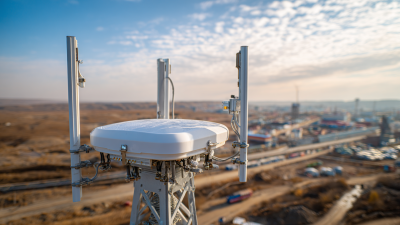
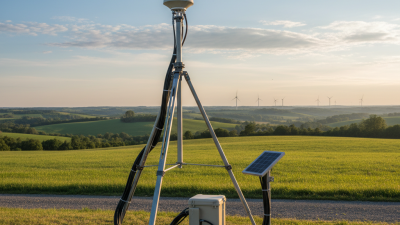
The rise of Multi Band RTK GNSS antennas has transformed the navigation and surveying industries. These antennas utilize multiple frequency bands to improve accuracy and reliability. This allows users to obtain precise positioning data even in challenging environments, such as urban areas or dense forests.
One key feature of these antennas is their ability to filter out interference effectively. This enhances the quality of the GPS signals received. As a result, users can achieve centimeter-level accuracy, which is essential for applications like agriculture and construction.
**Tip:** When choosing an RTK GNSS antenna, consider the operational environment. Factors such as tall buildings or foliage can impact signal reception.
The variety of Multi Band RTK GNSS antennas available today can be overwhelming. Some models may excel in certain conditions but perform poorly in others. Research is essential to identify the right antenna for specific needs.
**Tip:** Always check user reviews and expert recommendations. This helps ensure you invest in reliable equipment.
Key Features of 2026 Multi Band RTK GNSS Antennas
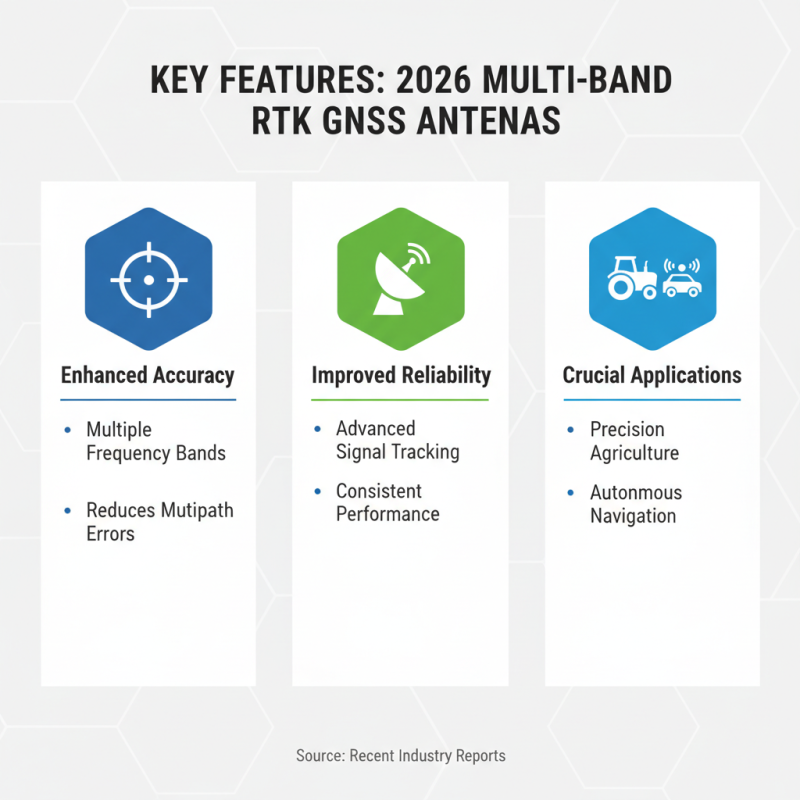
The 2026 Multi Band RTK GNSS antennas bring several noteworthy features to the forefront of the surveying and geospatial industries. With advancements in technology, these antennas now support multiple frequency bands, enhancing accuracy and reliability. According to recent industry reports, multi-band systems significantly reduce multipath errors and improve signal tracking. This capability is crucial for applications like precision agriculture and autonomous vehicle navigation, where high accuracy is essential.
In addition, these antennas often boast improved robustness against environmental conditions. Many models show resilience in extreme temperatures and wet conditions, which is vital for outdoor projects. Studies indicate that antennas built with advanced materials tend to have longer lifespans and better performance. It's important, however, to ensure compatibility with existing systems, as integration challenges can arise. Frequent updates and calibrations may also be necessary to retain peak performance.
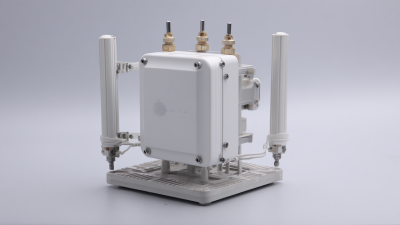
Another point worth considering is the weight and size of these antennas. A significant trend in 2026 is toward more compact designs, which facilitate easier transport and installation. Yet, users should remain mindful of the trade-offs. Compact antennas sometimes compromise on signal strength in challenging environments. Regular evaluations of performance and user feedback can help in selecting the right antenna for specific needs.
Market Trends in GNSS Antenna Technology for 2026
The GNSS antenna market is evolving. By 2026, the demand for multi-band antennas, especially Quad Band Gnss, is expected to surge. According to a recent industry report, a growth rate of around 8% is anticipated through the next few years. This surge reflects the increasing need for precise positioning in various applications, from agriculture to autonomous vehicles.
Many factors contribute to this trend. Enhanced signal accuracy and robustness are top priorities for users. Multi-band antennas can minimize signal degradation. The integration of next-generation satellite systems also plays a role. Users benefit from faster data processing and improved reliability. However, not all regions can support this transition. Infrastructure gaps could hinder widespread adoption.
Tip: Consider the installation environment when choosing an antenna. Urban areas may present more challenges due to signal blockage.
Another aspect to note is the technology's complexity. While advancements promise greater accuracy, they also introduce potential pitfalls. Users may face difficulties adapting to emerging technology. Training becomes essential for effective implementation.
Tip: Keep an eye on emerging technologies. Staying informed about advancements is crucial for maximizing efficiency.
The trajectory of GNSS antenna technology hints at exciting developments. However, it requires careful navigation of its challenges. Understanding these market trends will aid in making informed decisions.
Top Brands and Manufacturers of Multi Band RTK GNSS Antennas
As the demand for precision positioning technology grows, multi-band RTK GNSS antennas become increasingly vital. These antennas enhance accuracy by leveraging multiple frequency bands. Different brands and manufacturers excel in creating these components, tailoring them for diverse applications. Some focus on agriculture, while others target construction or surveying.
Quality and reliability are key factors in choosing a multi-band RTK GNSS antenna. Buyers seek antennas that can withstand harsh conditions. This includes exposure to extreme temperatures or moisture. The craftsmanship of manufacturers can significantly impact performance and longevity. Experts in the field emphasize that advanced materials and technologies play a crucial role in enhancing antenna capabilities.
However, the market can be overwhelming. Not all products deliver the promised performance. It's essential to conduct thorough research and seek well-reviewed options. Dual Band Gnss antennas, for instance, can significantly improve signal reception and accuracy. Buyers should also be aware of the need for ongoing innovation in this sector. Without constant advancements, older models may fall short in meeting current demands.
Criteria for Selecting the Best GNSS Antenna for Global Buyers
When selecting a GNSS antenna, buyers should consider several critical factors. Antennas with multi-band capabilities deliver better accuracy. A Dual Band Gnss Module is particularly advantageous for varied environments. This ensures coverage across different signal frequencies, improving performance in urban settings and open fields alike.
Another vital criterion is durability. Antennas exposed to harsh weather must withstand elements like rain, snow, and high winds. Strong materials and robust design aid in longevity. Users often overlook this aspect until problems arise. Reliable performance over time translates to better investment for buyers.
Additionally, compatibility with various receivers is essential. A versatile antenna can adapt to different systems, enhancing usability. Buyers sometimes fail to consider future needs, which can lead to buying decisions they regret later. Understanding both current and anticipated requirements is crucial for making the best choice.
Comparative Performance Analysis of Leading GNSS Antennas
When choosing a top multi band Rtk Gnss Antenna, performance analysis stands as a critical factor. The nuances of accuracy and reliability vary among different models. Some antennas may excel in urban environments, where signal reflections are common. Others may struggle in the same settings, leading to unexpected variances in data accuracy.
Environmental conditions significantly impact GNSS antenna performance. For example, trees, buildings, and weather can obstruct signals. A top-performing RTK GNSS antenna should handle these challenges gracefully. However, not all antennas demonstrate this resilience. Some may require calibration adjustments more frequently, affecting operational efficiency.
Field tests reveal discrepancies in tracking capabilities. One antenna might acquire signals faster, while another shows better stability over time. Users often overlook these details, focusing solely on specifications. Practical experience is invaluable in assessing real-world performance. Considerations of durability and response to interference add layers to the analysis. Each feature contributes to the overall effectiveness of an RTK GNSS antenna in varying conditions.
2026 Top Multi Band RTK GNSS Antenna Performance Comparison
Future Innovations in Multi Band RTK GNSS Antenna Design
The future of multi-band RTK GNSS antenna design promises remarkable innovations. Engineers are rethinking antenna structures to enhance accuracy and reliability. New materials are being explored to improve signal strength, even in challenging environments. Lightweight, durable composites could allow for broader applications in various industries.
Enhanced algorithms will also play a key role. These algorithms must process data efficiently and accurately, minimizing errors from interference. The integration of machine learning could provide adaptive capabilities, enabling antennas to refine their performance based on real-time conditions. However, the complexity of such integrations raises challenges. Balancing performance with simplicity remains a significant hurdle.
User feedback will shape design improvements. Constant innovation must address real-world experiences. Antenna placement and environmental factors impact performance. Users often find it frustrating when specifications do not align with their experiences. Open dialogue between manufacturers and users is essential, fostering trust and guiding future developments.
2026 Top Multi Band RTK GNSS Antenna for Global Buyers
| Model | Frequency Bands | Phase Center Offset (PCO) | Weight | Power Consumption |
| Model A | L1, L2, L5 | -2 mm | 300 g | 1.5 W |
| Model B | L1, L2, L3 | -3 mm | 250 g | 1.2 W |
| Model C | L1, L2, L4 | -2.5 mm | 280 g | 1.3 W |
| Model D | L1, L2, L6 | -1.8 mm | 320 g | 1.4 W |
FAQS
: These antennas use multiple frequency bands to improve navigation and surveying accuracy.
They provide precise positioning, even in urban areas or dense forests, which enhances efficiency.
They effectively filter out interference, improving GPS signal quality and achieving centimeter-level accuracy.
Consider the operational environment, as tall buildings or foliage can affect signal reception.
No, some models may excel in specific conditions but perform poorly in others. Research is crucial.
Very. Antennas must withstand harsh weather to ensure longevity. Users often overlook this until issues arise.
Yes, compatibility enhances usability. Failing to consider future needs can lead to regretful purchases.
Engineers are exploring new materials and algorithms to enhance performance and accuracy, despite integration challenges.
Real-world experiences guide improvements. Open dialogue fosters trust and helps in addressing user frustrations.
Balancing performance with simplicity is a significant hurdle as complexity increases.
Conclusion
The article "2026 Top Multi Band RTK GNSS Antenna for Global Buyers" provides a comprehensive overview of the advancements and trends in Multi Band RTK GNSS antennas. It highlights the key features of these antennas, including improved accuracy, robustness, and compatibility with various signals, which are essential for precision applications in surveying, agriculture, and autonomous vehicles.
Market trends for 2026 indicate an increasing demand for innovative GNSS technology, driven by the need for enhanced positioning solutions. The article also outlines the criteria buyers should consider when selecting the best Multi Band RTK GNSS antenna, such as performance metrics, environmental durability, and integration capabilities. Furthermore, it discusses the comparative performance of leading antennas and forecasts future innovations that will shape the design and functionality of Multi Band RTK GNSS antennas in the coming years.